
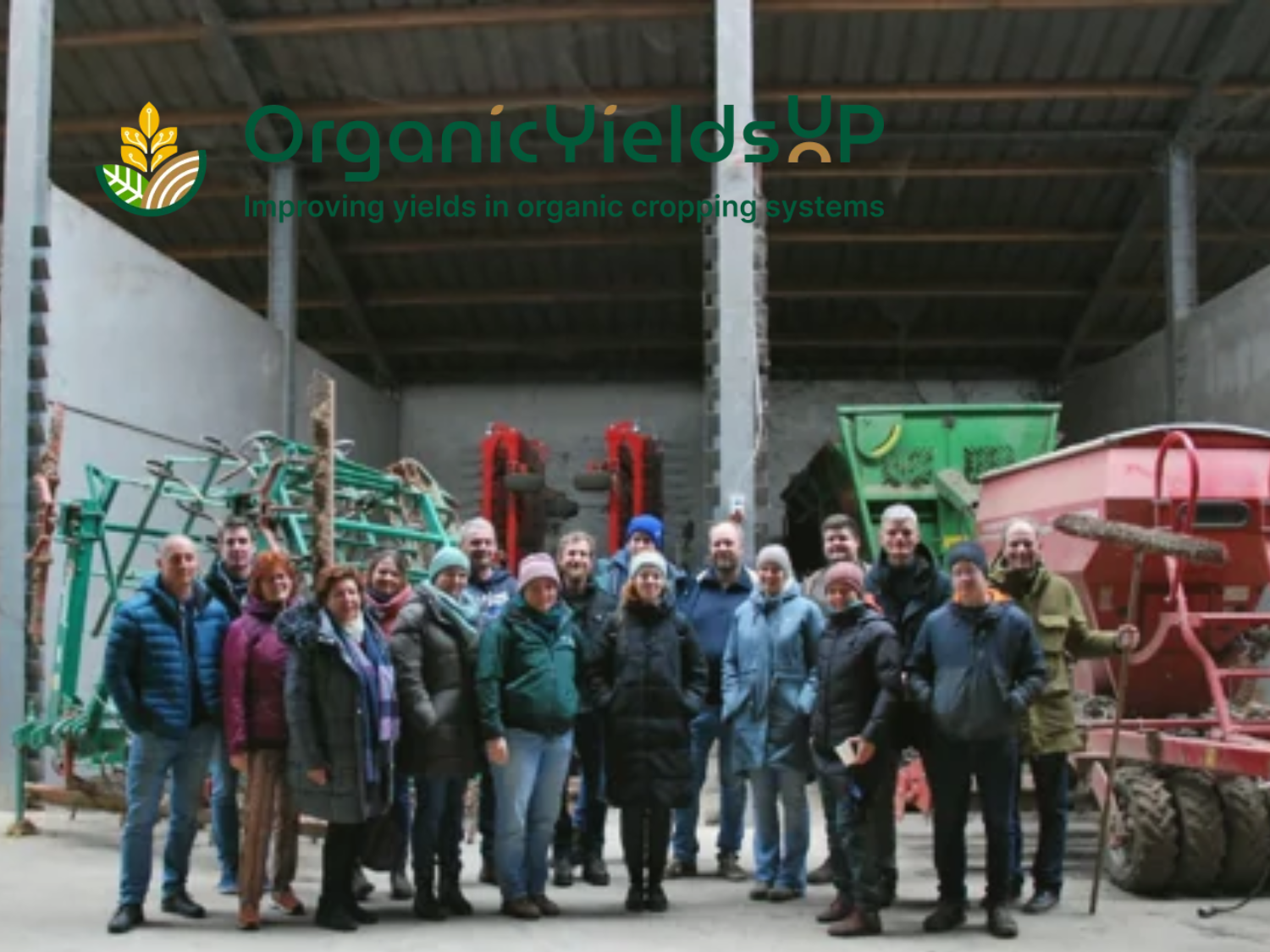
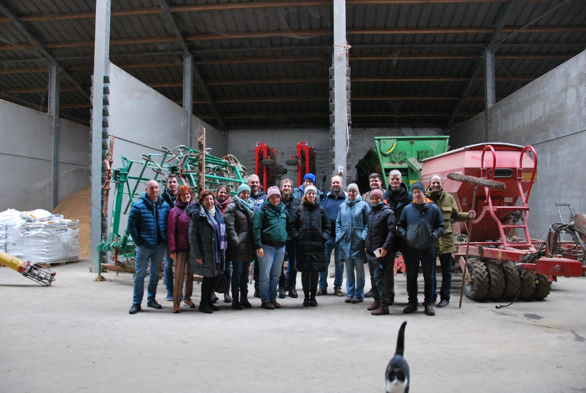
Farmers, advisers and researchers from Germany, Hungary and Luxembourg came together in Luxembourg for an OrganicYieldsUP cross visit focused on the challenges and opportunities associated with improving yields in organic farming systems.
Threefarms, three approaches to organic farming
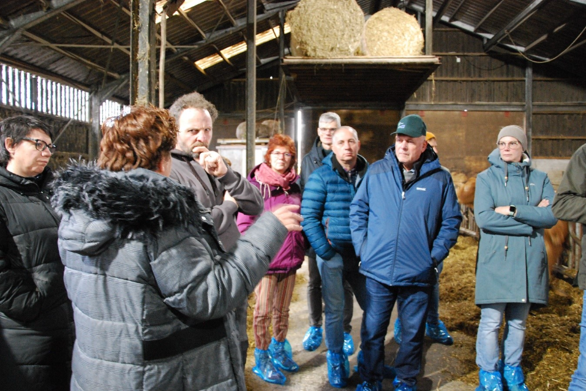
The first day included visits to the Miller, Knapphaff and Jacobs farms. Each farm presented a distinct approach to diversification, nutrient management, crop rotation, processing and product marketing.
Diversification and local value creation at theMiller farm
The Miller farm, located in Bastendorf, converted to organic farming in 2016 and manages approximately 110 hectares, including 45 hectares of arable land. Its activities include suckler cows, laying hens, sheep and crops such as lentils and spelt.
The farm has invested in diversification and value-added products. Mustard is processed on the farm and sold through the farm shop and selected organic retailers, while spelt is transformed into pasta by another organic farm in Luxembourg. These activities show how processing and direct marketing can create additional income streams and reduce dependence on conventional distribution channels.
Circularityand new business models at Knapphaff
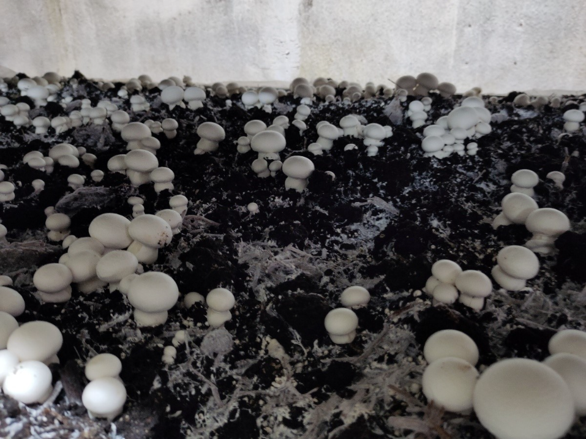
Covering approximately 220 hectares, Knapphaff is one ofLuxembourg’s largest organic farms and stands out as a stockless organic farm. After moving away from conventional pig production, the farm converted former livestock buildings into mushroom-production facilities.
The farm exchanges clover-grass for manure with other organic farms, helping to compensate for the absence of livestock and support soil fertility. Residues from mushroom production, known as champost, are returned to the fields as fertiliser. Alongside mushrooms, the farm is exploring permanent and alternative crops, including choke berries, bush beans and sugar snap peas.
Long-termorganic experience at the Jacobs farm
The final visit took participants to the Jacobs farm in Kalborn, which has been managed organically since 1988. The farm combines dairy production with arable cropping and seed production across approximately 120 hectares.
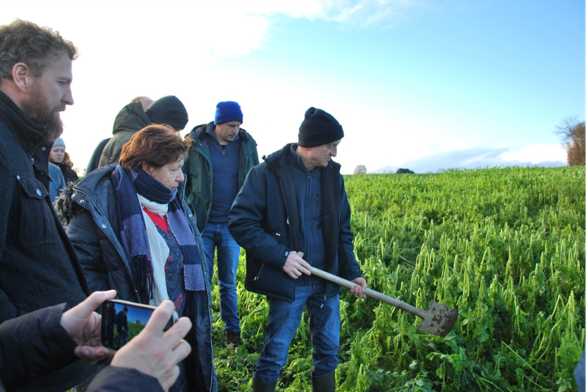
Participants learned about crop rotations, cover crops, soil management and fertilisation. The rotation includes three years of clover-grass, while oil radish, mustard and summer vetch are used as cover crops. Drawing on around four decades of experience, the farm also highlighted sulphur fertilisation in clover-grass mixtures as a practice that can support the mixture and the following crop.
Lookingbeyond yield per hectare
One of the main ideas to emerge was the concept of multidimensional yield. Participants emphasised that the performance of organic farming systems should not be assessed exclusively in kilograms produced per hectare.
Yield discussions should also consider stability, profitability, environmental performance, resource efficiency and the public and ecosystem services delivered by organic agriculture. From this perspective, maintaining stable yields under increasingly unpredictable conditions can be as important as continuously increasing production.
A shared priority: yield stability
Across the three countries, stakeholders weremore concerned with stable and resilient yields than with pursuing higheroutput at any cost.
The national contexts nevertheless differ. In Hungary, farmers are strongly affected by drought and extreme fluctuations in precipitation. In Luxembourg, organic arable farming faces limitations linked to infrastructure,investment and market opportunities. In northern Germany, organic cereal production is affected by challenges such as low wheat protein content and increasingly demanding flour-quality requirements.
Fromshared challenges to practical solutions
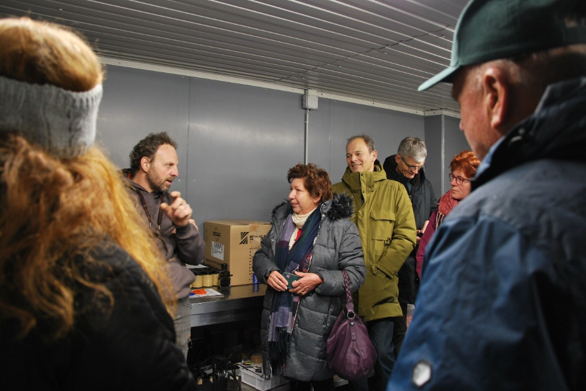
On the second day, participants joined a collaborative workshop. Challenges previously identified through national discussions were grouped into production and cultivation, market conditions, and regulatory and broader framework conditions. Participants then prioritised the most important issues and used a World Café process to develop and assess possible responses.
Strengtheningcooperation between farmers
Cooperation was considered one of the most promising responses to limited infrastructure and difficult market conditions. Proposals included machinery-sharing arrangements, joint marketing initiatives, farmer cooperatives, trading platforms and online marketplaces. These models can help reduce investment costs, improve access to equipment and open markets that maybe difficult to reach individually.
Adaptingproduction to climate change
Climate change affects crop selection, water availability, soil management, pest and disease pressure and weed control. Participants highlighted integrated responses, including diversified rotations, drought-resistant species and varieties, cover crops, mulch-based systems, improved water retention, landscape-level water management and organic breeding for climate-adapted varieties.
Closingnutrient cycles
Improving circularity was identified as an important component of productive organic systems, particularly for stockless farms. Cooperation between livestock and arable farms, exchange of clover-grass for manure, and cut-and-carry models were discussed as ways of improving nutrient availability, although implementation depends on logistics and economic viability.
Improvingknowledge exchange
Participants underlined the value of credible, practical and locally adapted advice. Farmer-to-farmer learning, demonstration farms and dissemination of good practices were identified as essential for translating research and innovation into workable solutions. A Central European organic knowledge platform and stronger support for farmer-to-farmer advice were among the ideas discussed.
Thevalue of learning across borders
The cross-visit enabled participants to look beyond national contexts and examine how similar challenges are addressed else where in Europe. Direct exchange at farm level made it possible to compare technical practices, business models and market strategies in real conditions. It also made the project’s work more tangible and strengthened connections between farmers, advisers and researchers.
Despite differences between Germany, Hungary and Luxembourg, several common priorities emerged: adapting to climate change, improving access to markets, diversifying farm activities, strengthening knowledge exchange and developing organic farming systems that are productive without compromising their environmental and social contribution.
The results of the cross-visit and workshop will support the development of yield-improvement strategies in the three countries and inform the project’s work at European level.
Keytakeaways
Organic yield should be understood as a multidimensional concept that goes beyond production measured in kilograms per hectare. In this context, yield stability and farm resilience are increasingly important, particularly under changing climatic and market conditions. Diversification, processing and direct marketing can contribute to stronger economic viability, while cooperation between farmers can improve access to machinery, infrastructure, knowledge and market opportunities. At the same time, adapting to climate change requires an integrated approach to crop, soil,water and landscape management. Cross-border cooperation and farmer-to-farmer exchanges also play an important role by facilitating the sharing of practical knowledge that can be adapted to different local contexts.


